


When planning a new accommodation, tourism, or commercial project, one of the first decisions is how the building will be constructed. Traditional on-site construction remains common, but prefabricated solutions such as the Apple Cabin are becoming an increasingly practical option for projects that value faster deployment, flexible design, and controlled factory production.
So, how does an Apple Cabin compare with traditional construction?
1. Construction Time
Traditional buildings require most construction work to be completed directly on site. Weather conditions, labor availability, material delivery, and contractor schedules can all influence the construction timeline.
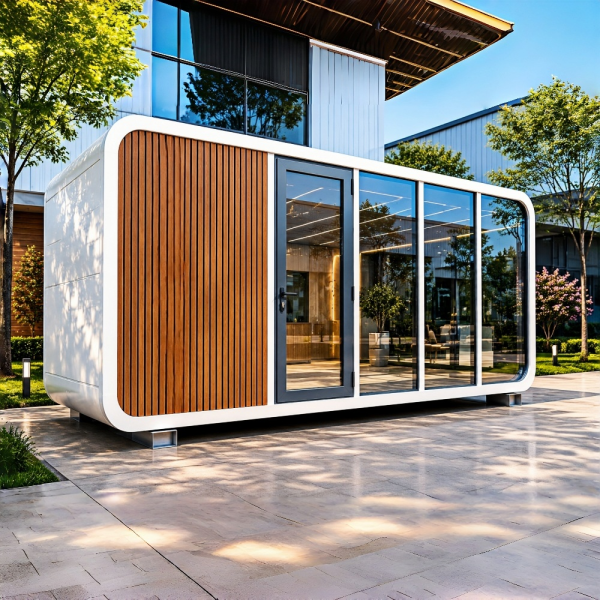
An Apple Cabin is different because most of the structure and interior work can be completed in the factory.
After the design is confirmed, our typical production period is approximately 25–30 days.
When the cabin arrives at the project site, customers mainly need to prepare the foundation, positioning, utility connections, and other local work required for their project.
This can significantly simplify on-site construction.
2. More Predictable Production
Traditional construction usually involves several stages and different contractors.
Prefab production allows many processes to take place in one controlled manufacturing environment.
During Apple Cabin production, structural assembly, wall installation, interior finishing, electrical work, plumbing preparation, doors, windows, and other components can be completed before shipment.
Customers can also receive production progress updates.
3. Flexible Customization
Choosing prefabricated construction does not necessarily mean choosing a fixed design.
Apple Cabins can be customized according to different project requirements.
Customization can include:
- Cabin dimensions
- Interior layout
- Doors and windows
- Exterior wall materials
- Interior wall finishes
- Flooring
- Bathroom
- Kitchen
- Cabinets and wardrobes
- Electrical system
- Plumbing system
- Colors
This makes it possible to develop cabins for different applications while maintaining a consistent architectural style.
4. Easier Expansion
One important advantage of modular accommodation is scalability.
A tourism operator, for example, may begin with several cabins and add additional units as the project develops.
This approach can be particularly useful for glamping resorts, holiday parks, campsites, and other projects where accommodation capacity may increase gradually.
5. Transportation Considerations
Traditional buildings are constructed directly at the destination, while Apple Cabins need to be transported from the factory.
Therefore, international buyers should consider ocean freight, inland transportation, unloading conditions, site access, and local regulations when planning the project.
Our team can help customers evaluate transportation options based on cabin size, quantity, and destination port.
Which Option Is Better?
There is no single construction method suitable for every project.
Traditional construction may be preferred when a project requires a highly site-specific permanent structure.
Apple Cabin can be an attractive alternative when the priorities include:
- Faster deployment
- Factory-controlled manufacturing
- Customizable design
- Reduced on-site work
- Modular expansion
- Modern appearance
Find the Right Solution for Your Project
If you are considering Apple Cabins for a resort, campsite, guest accommodation, garden project, or commercial development, the first step is to evaluate your site and requirements.
Tell us your intended use, required quantity, preferred size, destination country, and layout requirements.
Our team can help you develop a suitable Apple Cabin solution for your project.